Electric vehicles (EVs) are rapidly transforming Nepal’s automotive landscape, especially in urban centers like Kathmandu. One of the biggest reasons behind this shift is the strong support from the Government of Nepal through favorable policies, tax benefits, and long-term sustainability goals.
If you’re planning to buy an EV or simply want to understand why electric cars are booming in Nepal, this guide explains everything—from EV tax structure in Nepal to government incentives and future policies.
Introduction: Why Government Policy Matters for EV Growth in Nepal
Government policy plays a crucial role in shaping any country’s automobile market. In Nepal, where vehicles are heavily taxed, policy decisions directly affect affordability and adoption.
Unlike petrol and diesel vehicles—which face extremely high taxes—electric vehicles benefit from significantly reduced import duties, lower excise taxes, and other incentives. These policies are designed to:
- Reduce air pollution in cities like Kathmandu
- Lower dependence on imported fossil fuels
- Promote the use of clean hydropower energy
- Encourage sustainable transportation
As a result, EV adoption in Nepal has surged dramatically, with electric cars making up a large portion of new vehicle imports in recent years (Nepalevs).
Overview of EV Policies in Nepal
Electric vehicles in Nepal are governed by several key laws and regulatory frameworks. These policies ensure proper taxation, safety standards, and infrastructure development.
Key Legal Frameworks
EVs in Nepal are regulated under:
- Finance Act (updated annually through national budget)
- Customs Act and Excise Duty regulations
- Transport Management Act 2049
- Environmental and emission-related policies
These frameworks are implemented by government bodies such as the Department of Transport Management, Department of Customs, and Nepal Electricity Authority (Common Law Chambers).
EV Tax Structure in Nepal (2025–2026)
Understanding the EV tax system in Nepal is essential because it directly impacts the final price of electric cars.
Main Taxes Applied to EVs
Electric vehicles in Nepal are subject to:
- Customs Duty
- Excise Duty
- Value Added Tax (VAT – 13%)
- Road Development Fee
However, compared to petrol and diesel vehicles, these taxes are significantly lower.
EV Tax Rates Based on Motor Power
Here’s a simplified breakdown of EV tax rates in Nepal (FY 2025/26):
| Motor Power | Customs Duty | Excise Duty | VAT | Road Fee |
|---|---|---|---|---|
| Up to 50 kW | 15% | 5% | 13% | 5% |
| 51–100 kW | 20% | 15% | 13% | 5% |
| 101–200 kW | 30% | 20% | 13% | 5% |
| 200+ kW | Up to 80% | Up to 50% | 13% | 5% |
These rates are still far lower than petrol vehicles, which can face total taxation exceeding 200% in some cases (ev-nepal.com).
Comparison: EV vs Petrol Vehicle Tax in Nepal
One of the biggest reasons EVs are gaining popularity is the massive tax difference compared to traditional vehicles.
Petrol/Diesel Vehicles
- High customs duty
- High excise duty
- Additional environmental taxes
- Overall tax burden can be extremely high
Electric Vehicles
- Reduced customs duty
- Low or zero excise duty (especially for smaller EVs)
- Lower road tax
- No pollution tax
Tax Benefits for Electric Cars in Nepal
1. Lower Import Duties
EVs are taxed based on motor power rather than engine size, which generally results in lower import duties.
- Small EVs (under 100 kW) have relatively low customs and excise rates
- Petrol vehicles in similar segments face much higher taxation
2. Reduced or Zero Excise Duty
In many EV categories, excise duty is either very low or completely waived—an important advantage in Nepal’s vehicle tax mix.
3. Lower Annual Road Tax
EV owners pay significantly less annual road tax compared to fuel vehicles. Rates are typically based on motor power instead of engine capacity (Common Law Chambers).
4. No Pollution Tax or Emission Testing
Electric vehicles do not emit tailpipe gases and are generally exempt from emission testing requirements, simplifying ownership.
5. VAT Structure Remains Standard
EVs still pay 13% VAT, but because import duties are lower, the final tax burden remains lower than petrol vehicles.
Tax Benefits for Electric Two-Wheelers
Electric scooters and bikes can be even more attractive due to low taxation:
- Customs Duty: Around 5–10%
- Excise Duty: 0%
- VAT: 13%
This makes electric scooters one of the most cost-effective options in Nepal (ev-nepal.com).
Government Incentives Beyond Tax Benefits
1. Charging Infrastructure Support
- Only 1% customs duty on EV charging equipment
- 5-year income tax exemption for charging station businesses (Nepalevs)
2. Policy Stability
The government has maintained EV tax rates in recent budgets to ensure market stability and encourage long-term investment (The Kathmandu Post).
3. National EV Adoption Targets
Nepal has set ambitious goals, including a target where a large majority of private vehicle sales are electric by 2030 (Nepalevs).
4. Corporate Benefits
Lower total ownership cost makes EV fleets more accessible for businesses, supporting broader adoption in the private sector.
EV Registration Process in Nepal
To legally operate an EV in Nepal, owners must complete the registration process through the Department of Transport Management.
Required Documents
- Customs clearance certificate
- VAT invoice
- Vehicle specifications
- Insurance
- Road tax payment
Unlike petrol vehicles, EVs typically do not require pollution certificates (Common Law Chambers).
Challenges in EV Policy and Taxation
1. Tax Changes and Uncertainty
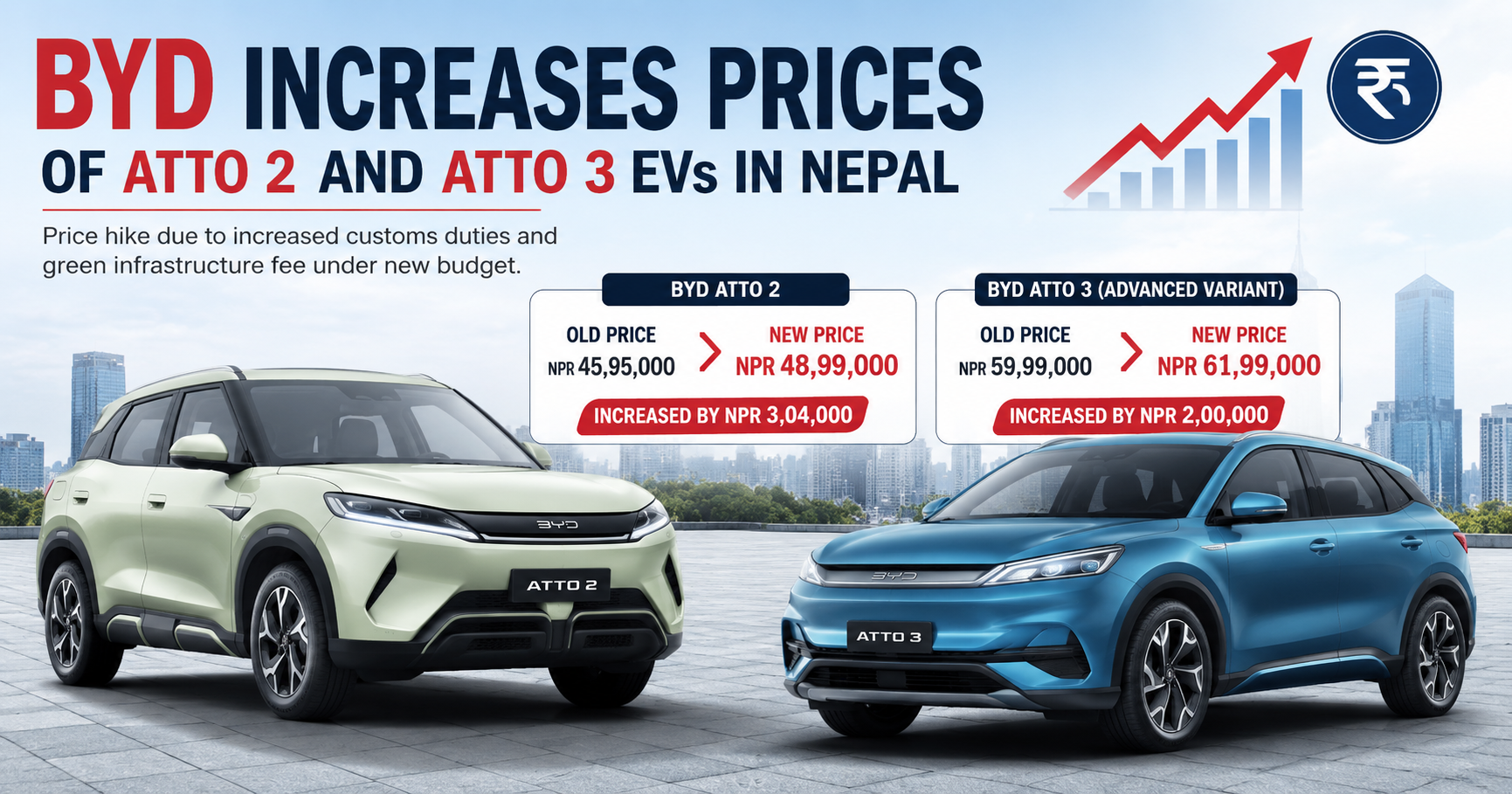
Occasional policy changes can raise customs duty for certain categories, causing price fluctuations. Recent changes have increased taxes for some entry-level EVs (ev-nepal.com).
2. Lack of Direct Subsidies
Nepal does not typically provide direct cash subsidies for EV buyers; benefits are mainly indirect through tax reductions.
3. Infrastructure Limitations
Charging stations are expanding, but coverage remains limited outside major cities, which slows rural adoption.
Why Government Policies Are Driving EV Growth in Nepal
Despite challenges, Nepal is becoming one of the fastest-growing EV markets globally due to strong tax incentives, rising fuel costs, clean hydropower electricity, and government sustainability commitments.
EVs now account for a major share of new vehicle imports in Nepal, showing how effective these policies can be (Nepalevs).
Future of EV Policies in Nepal
Looking ahead, Nepal’s EV policies are expected to evolve further. Likely developments include expanded charging infrastructure, continued tax incentives, potential stricter regulations on petrol/diesel vehicles, and increased adoption of electric public transport.
Conclusion: Is Nepal an EV-Friendly Country?
Yes—Nepal is one of the most EV-friendly countries in South Asia when it comes to taxation and policy support. With lower import duties, reduced excise tax, cheaper road tax, and strong government backing, EVs are both environmentally responsible and financially smart.
Keywords used: EV tax Nepal, electric vehicle policy Nepal, EV import duty Nepal, EV benefits Nepal, electric car tax Nepal, EV government incentives Nepal, EV road tax Nepal, EV registration Nepal, EV laws Nepal, EV future Nepal